
Noutati si articole

The Enduring Allure of Games: From Ancient Dice to Modern Consoles

The Enduring Allure of Games: From Ancient Dice to Modern Consoles

Throughout human history, games have held a central place in our lives. They entertain, challenge, and connect us. From the simplest of dice games played in ancient civilizations to the complex virtual worlds of modern video games, the impulse to play seems to be deeply ingrained in our nature. But what is it about games that makes them so compelling? And how have they evolved to become such a ubiquitous part of contemporary culture?

A Brief History of Play

The earliest evidence of games dates back thousands of years. Archaeological digs have uncovered dice made of animal bones and board games etched into stone tablets from ancient Egypt and Mesopotamia. These early games were often associated with religious rituals or divination practices. The outcome of a game could be interpreted as a message from the gods, or a way to predict the future.

As civilizations developed, games became more sophisticated and diversified. The Greeks were known for their athletic competitions, which were an integral part of their culture. The Romans enjoyed gladiatorial combats and chariot races. In Asia, games like chess and Go emerged, demanding strategic thinking and tactical prowess. The common thread that binds these diverse forms of play is the human desire to test our skills, to compete, and to experience the thrill of victory.

The invention of the printing press in the 15th century made games more accessible to the masses. Playing cards became widespread, leading to the development of countless card games. Board games also became more popular, providing families with a source of entertainment and social interaction. The 19th century saw the rise of sports as organized spectator events, further fueling the passion for games and competition.

The Digital Revolution: Video Games and Beyond

The 20th century witnessed a dramatic shift in the landscape of games with the advent of electronic technology. The first video games emerged in the 1950s, initially as academic experiments. In the 1970s, arcade games like Pong and Space Invaders captured the public’s imagination, ushering in the golden age of video games.

The introduction of home consoles in the late 1970s and early 1980s brought video games into the living rooms of millions of people. Games like Pac-Man, Donkey Kong, and Super Mario Bros. became cultural icons. The development of the internet in the 1990s further revolutionized the gaming industry, leading to the rise of online multiplayer games. Massively multiplayer online role-playing games (MMORPGs) like World of Warcraft created vast virtual worlds where players could interact, cooperate, and compete with each other.

Today, the video game industry is a multi-billion dollar global phenomenon. Games are available on a wide range of platforms, from consoles and PCs to mobile devices and virtual reality headsets. The types of games available are equally diverse, encompassing everything from action and adventure to strategy and simulation. Furthermore, the allure of online entertainment has expanded beyond traditional video games, with online platforms like casibom offering diverse options to engage with interactive experiences.

The Psychology of Play: Why Games Matter

Why are games so addictive? Psychologists have identified several factors that contribute to the appeal of games. One key element is the sense of challenge and accomplishment. Games provide us with goals to strive for and rewards for achieving them. This can be particularly satisfying in a world where many aspects of life feel beyond our control.

Games also offer a sense of immersion and escapism. When we are engaged in a game, we can temporarily forget about our worries and anxieties. We can explore fantastical worlds, take on different identities, and experience emotions that we might not otherwise encounter in our daily lives. This can be a valuable form of stress relief and mental relaxation.

Furthermore, games can be a powerful tool for social connection. Many games involve teamwork and cooperation, allowing us to build relationships with other players. Online games can connect people from all over the world, fostering a sense of community and shared experience. Even competitive games can provide opportunities for social interaction and friendly rivalry.

The Future of Games

The future of games is likely to be even more immersive and interactive. Virtual reality and augmented reality technologies promise to blur the lines between the physical and digital worlds, creating entirely new forms of gameplay. Artificial intelligence (AI) is also playing an increasingly important role in game development, allowing for more realistic and dynamic game environments.

As games continue to evolve, they will undoubtedly remain a central part of human culture. They provide us with entertainment, challenge, social connection, and a sense of accomplishment. Whether we are playing a simple card game with friends or exploring a vast virtual world, the enduring allure of games is likely to persist for generations to come.

Navigating Life’s Unexpected Turns: A Guide to Resources and Resilience

Navigating Life’s Unexpected Turns: A Guide to Resources and Resilience

Life is a journey filled with unexpected twists and turns. From joyous celebrations to challenging hardships, we all encounter situations that require us to adapt, learn, and sometimes, seek external support. This article serves as a compass, guiding you through various resources and offering strategies for building resilience in the face of life’s uncertainties.

Understanding Your Rights and Responsibilities

In our complex world, understanding our rights and responsibilities is crucial. Whether you’re renting an apartment, starting a business, or simply navigating everyday interactions, knowing your legal standing can provide a sense of security and empower you to make informed decisions. Legal matters can be daunting, and sometimes seeking professional guidance is essential. If you find yourself in a situation where you need legal advice, remember that resources are available. Understanding the basics of contract law, property rights, and consumer protection can equip you to navigate various situations with confidence. For more complex issues, consulting a lawyer can provide clarity and ensure your rights are protected.

Building a Strong Support System

Humans are social creatures, and having a strong support system is vital for our well-being. This support system can consist of family, friends, colleagues, or even members of a community group. These individuals provide emotional support, practical assistance, and a sense of belonging. Cultivating meaningful relationships requires effort and vulnerability, but the rewards are immeasurable. Reach out to loved ones, engage in activities you enjoy, and consider joining groups or organizations that align with your interests. Remember, seeking help is a sign of strength, not weakness. Don’t hesitate to lean on your support system during challenging times. Building and maintaining these connections is an investment in your long-term happiness and resilience.

Financial Planning for the Future

Financial stability is a cornerstone of overall well-being. Planning for the future, whether it’s retirement, a down payment on a house, or simply managing day-to-day expenses, can alleviate stress and provide a sense of control. Start by creating a budget to track your income and expenses. Identify areas where you can save money and set realistic financial goals. Explore different investment options, such as stocks, bonds, or real estate, to grow your wealth over time. Consider consulting a financial advisor to develop a personalized financial plan that aligns with your goals and risk tolerance. Remember, even small steps towards financial security can make a significant difference in the long run. Educate yourself about personal finance and take proactive steps to secure your future.

Developing Resilience in the Face of Adversity

Resilience is the ability to bounce back from adversity. It’s not about avoiding challenges, but rather about developing the skills and mindset to cope with them effectively. Cultivating resilience involves several key strategies. First, practice self-care by prioritizing your physical and mental health. Engage in activities that bring you joy and relaxation. Second, develop problem-solving skills by breaking down challenges into smaller, manageable steps. Focus on what you can control and let go of what you can’t. Third, maintain a positive attitude by focusing on your strengths and accomplishments. Practice gratitude and surround yourself with positive influences. Finally, learn from your experiences and view setbacks as opportunities for growth. Remember, resilience is a skill that can be developed over time with practice and persistence. Embrace challenges as opportunities for learning and growth, and you will become more resilient in the face of life’s inevitable setbacks.

The Enduring Appeal of Timeless Wisdom

The Enduring Appeal of Timeless Wisdom

In a world saturated with fleeting trends and ephemeral fads, there’s a deep-seated human yearning for something more substantial, something that transcends the transient nature of contemporary life. We crave wisdom that has stood the test of time, knowledge that offers solace, guidance, and a sense of connection to something larger than ourselves. This enduring appeal of timeless wisdom manifests in various forms, from ancient philosophies to enduring literary classics, each offering unique perspectives on the human condition.

The Enduring Power of Ancient Philosophies

Throughout history, various philosophical schools have emerged, each offering its own framework for understanding the world and our place within it. Stoicism, with its emphasis on virtue, reason, and acceptance, continues to resonate with individuals seeking resilience and inner peace in the face of adversity. Similarly, the teachings of Buddhism, with its focus on mindfulness, compassion, and the impermanence of all things, provide a path to enlightenment and liberation from suffering. These ancient philosophies, though originating centuries ago, offer profound insights that remain relevant and applicable to our modern lives.

The beauty of these philosophies lies in their adaptability. They are not rigid doctrines but rather flexible frameworks that can be applied to a wide range of situations. Whether navigating career challenges, relationship difficulties, or simply seeking a deeper understanding of oneself, the wisdom of ancient philosophers can provide valuable guidance and perspective. Furthermore, the study of these philosophies can foster critical thinking skills, encouraging us to question assumptions, challenge conventional wisdom, and develop our own informed opinions.

For example, consider the Stoic concept of focusing on what we can control. In a world filled with uncertainty and external pressures, this principle can be incredibly empowering. By shifting our focus from things we cannot change to things we can, such as our own thoughts, actions, and attitudes, we can cultivate a sense of agency and resilience. This simple yet profound idea can significantly reduce stress, improve decision-making, and enhance overall well-being.

Literature as a Mirror to the Human Soul

Beyond formal philosophical systems, timeless wisdom can also be found within the pages of great literature. Novels, plays, and poems offer profound insights into the human experience, exploring themes of love, loss, ambition, betrayal, and redemption. By immersing ourselves in these stories, we can gain a deeper understanding of ourselves and others, developing empathy, compassion, and a greater appreciation for the complexities of human relationships.

Classic works of literature, such as Shakespeare’s plays, Tolstoy’s novels, and the poetry of Maya Angelou, continue to captivate readers because they address universal themes that resonate across cultures and generations. These works offer a mirror to the human soul, reflecting our hopes, fears, dreams, and struggles. By engaging with these stories, we can learn from the mistakes of others, find inspiration in their triumphs, and gain a new perspective on our own lives.

Reading literature also enhances our vocabulary, improves our communication skills, and cultivates our imagination. It allows us to step outside of our own limited perspectives and experience the world through the eyes of others, broadening our horizons and fostering a deeper appreciation for the diversity of human experience. The act of reading, itself, is a form of mindfulness, encouraging us to slow down, focus our attention, and engage with the present moment.

Finding Meaning in Everyday Experiences

While ancient philosophies and classic literature offer profound sources of wisdom, it’s important to remember that wisdom can also be found in the everyday experiences of life. Simple acts of kindness, moments of connection with nature, and even the challenges we face can all provide opportunities for growth, learning, and self-discovery. The key is to cultivate a mindset of openness, curiosity, and a willingness to learn from every experience.

Pay attention to the lessons life presents. Reflect on your experiences, both positive and negative, and consider what you can learn from them. Talk to people from different backgrounds and perspectives. Embrace new challenges and step outside of your comfort zone. By actively seeking out new experiences and reflecting on their meaning, you can cultivate wisdom that is both personal and profound.

Sometimes, seeking guidance can be helpful. For some, that might mean delving into astroloji or dream interpretation to gain insights into their personality or subconscious. Others might find solace in religious texts or spiritual practices. Ultimately, the path to wisdom is a personal one, and it’s important to find the sources of guidance that resonate most deeply with you.

The Ongoing Quest for Wisdom

The pursuit of timeless wisdom is not a destination but rather an ongoing journey. It requires a commitment to lifelong learning, a willingness to question assumptions, and a deep desire to understand ourselves and the world around us. By embracing this quest, we can cultivate resilience, find meaning and purpose in our lives, and contribute to a more compassionate and understanding world.

In conclusion, the enduring appeal of timeless wisdom lies in its ability to offer solace, guidance, and a sense of connection in a world often characterized by uncertainty and change. Whether through ancient philosophies, classic literature, or everyday experiences, the pursuit of wisdom is a lifelong journey that can enrich our lives in countless ways. So, embrace the quest, cultivate curiosity, and never stop seeking the timeless truths that can illuminate your path.

The Enduring Allure of Simple Pleasures: Finding Joy in Everyday Life

The Enduring Allure of Simple Pleasures: Finding Joy in Everyday Life

In our fast-paced, technology-driven world, it’s easy to get caught up in the pursuit of grand ambitions and material possessions. We often find ourselves chasing after the next big thing, neglecting the simple pleasures that can bring us genuine happiness and contentment. This blog post explores the enduring allure of these small joys and how incorporating them into our daily lives can significantly improve our overall well-being.

The Power of Mindfulness and Appreciation

One of the key ingredients to unlocking the joy found in simple pleasures is mindfulness. Mindfulness is the practice of being present in the moment, fully engaged in what we are doing or experiencing, without judgment. When we are mindful, we are better able to appreciate the beauty and wonder that surrounds us, even in the most mundane of tasks.

Consider the simple act of drinking a cup of coffee. Instead of rushing through it while checking emails or scrolling through social media, take a moment to savor the aroma, the warmth, and the taste. Notice the way the steam curls from the cup, the way the light catches the liquid, and the way the flavor lingers on your tongue. By being present in this moment, you can transform a simple task into a mindful and enjoyable experience.

Similarly, practicing gratitude can significantly enhance your appreciation for the simple things in life. Take a few moments each day to reflect on the things you are grateful for, no matter how small. It could be the sunshine on your face, a kind word from a friend, or a delicious meal. By focusing on the positive aspects of your life, you can cultivate a sense of contentment and joy.

Connecting with Nature: A Source of Renewal

For centuries, people have found solace and inspiration in nature. Spending time outdoors can be incredibly beneficial for our mental and physical health. Whether it’s a walk in the park, a hike in the mountains, or simply sitting in your backyard, connecting with nature can help reduce stress, improve mood, and boost creativity.

The simple act of observing nature can be incredibly rewarding. Notice the intricate patterns of a flower, the rustling of leaves in the wind, or the flight of a bird. Listen to the sounds of nature – the chirping of crickets, the gentle flow of a stream, or the distant rumble of thunder. By immersing yourself in the natural world, you can reconnect with a sense of wonder and awe.

Gardening is another excellent way to connect with nature and experience the joy of creation. Planting a seed, nurturing it as it grows, and eventually harvesting the fruits (or vegetables!) of your labor can be incredibly satisfying. The act of getting your hands dirty, feeling the earth beneath your fingernails, and watching life unfold before your eyes can be a powerful reminder of the beauty and resilience of nature. Furthermore, paying attention to your health and beauty by spending time outdoors and engaging in physical activity can also improve your overall well-being.

The Joy of Human Connection

In our increasingly digital world, it’s easy to become disconnected from the people around us. However, human connection is essential for our well-being. Spending time with loved ones, engaging in meaningful conversations, and offering acts of kindness can bring us immense joy and fulfillment.

Simple acts of kindness can have a profound impact on both the giver and the receiver. Offering a helping hand to a neighbor, volunteering at a local charity, or simply offering a sincere compliment can brighten someone’s day and create a ripple effect of positivity. These acts of generosity not only benefit others but also boost our own sense of purpose and well-being.

Engaging in meaningful conversations with loved ones is another way to foster connection and deepen relationships. Put down your phone, turn off the television, and truly listen to what the other person has to say. Share your thoughts and feelings openly and honestly, and create a space where vulnerability and authenticity are valued. These moments of connection can strengthen bonds and create lasting memories.

Cultivating Creativity and Curiosity

Engaging in creative pursuits and nurturing our curiosity can also bring us immense joy. Whether it’s painting, writing, playing music, or simply exploring a new hobby, allowing ourselves to be creative can unlock a sense of flow and fulfillment.

Don’t be afraid to try new things and step outside of your comfort zone. Take a class, join a club, or simply explore a topic that interests you. Learning new skills and expanding your knowledge can be incredibly stimulating and rewarding. The process of discovery and growth can bring a sense of purpose and excitement to your life.

Reading is another excellent way to cultivate curiosity and expand your horizons. Immerse yourself in a good book and allow yourself to be transported to another world. Explore different genres, authors, and perspectives. Reading can broaden your understanding of the world and spark new ideas and insights.

In conclusion, the enduring allure of simple pleasures lies in their ability to bring us joy, contentment, and a deeper appreciation for life. By practicing mindfulness, connecting with nature, fostering human connection, and cultivating creativity and curiosity, we can unlock the power of these small joys and create a more fulfilling and meaningful existence. So, take a moment to savor the simple things in life – the warmth of the sun, the laughter of a child, the beauty of a flower – and discover the joy that awaits you in the everyday moments.

Impactul sistemelor video in chirurgie, activitatile de diagnostic, prezentare si instruire

  • Sony

    Sony

    View post

Recentele progrese ale sistemelor video – legate în principal de captarea imaginilor de înaltă definiție ( High Definition ) și a imaginilor stereoscopice cunoscute și sub denumirea de imagini 3D – au un impact important asupra modalităților de realizare a actului chirurgical, de diagnosticare, de prezentare/instruire a personalului medical și monitorizarea pacientului.

Sistemele video 3D aduc un plus în chirurgia laparoscopică (generală, urologie, ORL) imaginile stereoscopice permițînd o mai bună diferențiere a planurilor țesuturilor și reducerea oboselii chirurgului.

În cazul sistemelor video 3D individuale (care constau într-o cască dispusă pe capul utilizatorului și prevăzută cu două monitoare miniaturale, cîte unul pentru fiecare ochi spre exemplu SONY HMS-3000MT) chirurgul prin simpla orientare în jos a ochilor poate vedea plaga direct și astfel trecerea de la imaginea afișată pe monitoare la imaginea directă se face fără efort.

Conectarea sistemelor video 3D la internet ca mijloc de transmisie a informației crează bazele exercitării medicinii de la distanță ( telemedicina ), permite transmisii ”Pe Viu” în sălile de instruire sau în cadrul manifestărilor științifice.

Combinația sistem video 3D – teletransmisie are impact asupra modalității de desfășurare a activităților de screening / diagnostic. Astfel sistemul video manevrat de personal mediu calificat este deplasat la pacient ( în unitatea medicală în care se află pacientul, în zona de dezastru sau teatrul de operațiuni militare ) captează imaginile relevante medical pe care le transmite medicului ce va lua decizia medicală adecvată.

Un exemplu tipic în acest sens, care se practică deja în mod curent în unele țări, este activitatea de screening a Retinopatiei de Prematuritate (RP). Personalul mediu se deplasează în maternitățile unde se află prematurii sub risc de a face RP, investighează pacientul ( folosind echipamentul RetCam Shuttle ) și fie stochează investigația fie o transmite on line la medicul diagnostician.
Screeningul conform statisticilor trebuie repetat de 2 pînă la 20 de ori pînă cînd se poate pune cu certitudine diagnosticul.
În această modalitate nouă de diagnosticare se fac economii importante legate de costul echipamentului folosit, de costul personalului calificat, se suplinește lipsa specialistului la locul pacientului și nu în ultimă instanță se permite diagnosticarea pacientului netransportabil sau greu transportabil și i se asigură acestuia din urmă un prognostic în mare măsură mai bun.

Microchirurgia deasemenea beneficiază de introducerea sistemului video 3D, Cele două camere conectate la microscopul operator producînd imaginile stereoscopice. Oftalmologia și Neurochirurgia sunt beneficiarele tipice ale noilor sisteme video.

Pentru obținerea potențialului maxim al noii tehnologii este necesară integrarea judicioasă a diverselor echipamente video (captare imagini, înregistrare, afișare …) cu echipamentele de teletransmisie.
Biotec srl (beneficiind de expertiza firmei SONY – liderul mondial în astfel de sisteme) concepe și realizează sisteme integrate de diagnosticare care includ echipamente medicale (microscoape de operație, biomicroscoape, retinoscoape, endoscoape, ecografe, ec.) cu sisteme video 3D și sisteme de transmisie de date.

Progrese tehnologice in oftalmologie – ecograf

  • absolu1

    absolu1

    View post

Dependența crescindă a oftalmologiei de dispozitivele medicale de diagnostic si tratament pune medicul oftalmolog in dilema alegerii echipamentului care sa-i asigure un instrument eficient de practicare a profesiei, avantajul competitiv față de confratii de profesie si un randament ridicat al investitiei.

Ecograful oftalmologic: Este un produs ajuns la maturitate care nu poate fi înlocuit de OCT in situații precum ochiul cu un grad de opacitate. In varianta standardizată asigură diagnosticul diferențial pentru afecțiunile retrobulbare.

Recent introduse sondele cu motor liniar cresc acuratetea/rezolutia imaginilor si diminueaza notabil uzura angrenajelor mecanice intilnite la solutiile clasice de baleiere.

Sonda cu mai mulți senzori, cea mai performantă fiind cea cu 5 inele asigură o imagine de acuratețe sporită și o profunzime fără egal, încît se poate examina de la partea posterioră a cristalinului la zone retrobulbară. Și fiindcă imaginile în astfel de situații pot fi mult mai sugestive vă prezentăm mai jos o imagine (A) cu o sondă clasică de 2o MHz și una  (B) cu 5 inele pe aceeași frecvență de 20 MHz:


Progrese tehnologice in oftalmologie – OCT

  • avanti

    avanti

    View post

Dependenta crescinda a oftalmologiei de dispozitivele medicale de diagnostic si tratament pune medicul oftalmolog in dilema alegerii echipamentului care sa-i asigure un instrument eficient de practicare a profesiei, avantajul competitiv fata de confratii de profesie si un randament ridicat al investitiei.

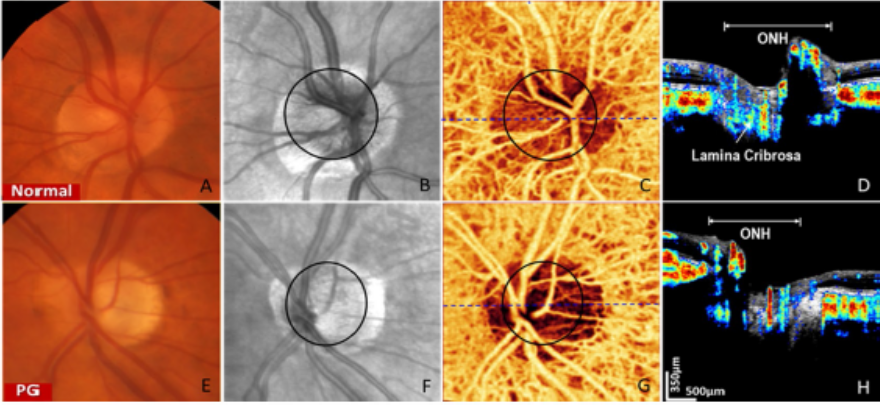
Computer tomograf oftalmologic (OCT): Varianta de OCT care functioneaza in domeniul spectral ( transformata Fourier ) s-a impus fara drept de apel. Frecventele de baleiere mai mari au permis imagini si reproductibilitate mai bune. Tehnica MCT ( Motion Control Technology ), progres notabil fata de sistemul Tracking, reuseste sa diminueze efectul perturbator al miscarilor oculare sacadice asupra imaginilor. Angiografia ( fara a fi necesara substanta de contrast) si masurarea indicilor de perfuzare a discului optic ce permit diagnostice precoce se realizeaza deja de cele mai avansate OCT-uri.

Imagini generate de noua generatie de OCTuri OPTOVUE/AVANTI:

progrese

Back to top

Site web realizat de Artia Studio